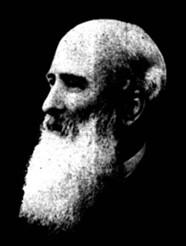
John Carter’s Obituary
This obituary was published in the Fleetwood Chronicle on 4th August 1911, based on an interview with him on 5th August 1898. A few minor errors in the article have been left intact.
DEATH OF MR. J. CARTER: A Former Fleetwood Goods Agent
The death of Mr. John Carter took place on Saturday morning at Bank House, Ulverston, the residence of his son, Mr. Walter Carter, manager of the local branch of the Manchester and Liverpool District Bank.
Deceased, who was 82 years of age, was well-known and highly respected in the Fylde district. He enjoyed fairly good health up to about two years ago, when he had a stroke of paralysis from which he only partially recovered. It is five years since he left Fleetwood.
Deceased, who was a native of Blackpool, held the post of goods manager at Fleetwood for 53 years, retiring in 1898.
Kindly, urbane, and genial, Mr. Carter was not only respected but revered by the Fleetwood indoor and outdoor staff, and his retirement was generally regretted by everybody who had been associated with him.
His employment by the railway company
Deceased was born in Blackpool, and commenced his railway career on the 11th of August , 1845. On that date he left Blackpool and travelled by road to Poulton, there being no railway connection from that place to Blackpool at the time. At Fleetwood he entered the employment of the Preston and Wyre railway company in the audit office.
In 1847 he was appointed booking and telegraph clerk at Fleetwood Station, and during the month of September in that year he had the honour to despatch the train which conveyed her most Gracious Majesty to London. That was the first occasion on which a Lancashire and Yorkshire train came to Fleetwood, and at that period the guards wore scarlet coats and cape to match – this being the uniform of the old Leeds and Manchester railway.
On April 28th, 1848, the first cargo of that once important traffic, pig iron, was landed at Fleetwood, and Mr. Carter was selected to take charge of the stock books and transfer stock books which were put into force from that date. He was actively engaged with that traffic up to the date of his retirement.
Owing to the competition of neighbouring ports the traffic seriously decreased, the ports of Manchester and Preston diverting a portion of it.
After his appointment the next momentous move in Mr. Carter’s career was his marriage, and on March 19th, 1856, he married Miss Margaret Lewtas Greenwood at Bispham Parish Church.
In April, 1859 he was made goods agent at Fleetwood, and held the position for 53 years, an exceptional record, and it is doubtful whether it has been equalled in the service of any company in the kingdom.
Development of the railway and its goods traffic
Numerous changes took place since the time Mr. Carter was appointed. First of all the traffic was worked with hand cranes. Then came the gradual transmission from sailing vessels to steamships, which necessitated a change from the manual labour to steam cranes, and afterwards, these had to make way for the splendid hydraulic appliances now in operation.
The present passenger station is the third structure during Mr. Carter’s term of office. Its predecessor was in the vicinity of the Crown Hotel, and the goods warehouses are also the third which the traffic requirements have enforced during the same times. Reviewing the increases made during that period it may be stated that the China clay traffic commenced in 1861, and has continued to develop satisfactorily. Wyre Dock has been opened, a fine service of pleasure steamers, the Belfast boats, have been organised, and the salt and alkali works have been built, whilst the steam trawling fishing industry has increased by leaps and bounds.
Fleetwood’s early accommodation as a port town
With regard to the town itself, Mr. Carter remembered it as “a nice little place,” when he first came to live in it. Practically its inhabitants were dependent upon the fishing industry, and did not number more than 3,000. Apart from North Euston Hotel there was very little or no accommodation for visitors in the town.
His public work for the town; summing up his achievements
Mr. Carter was not altogether oblivious to anything but railway and goods traffic during his long sojourn in Fleetwood. He served the district faithfully and well for some years on the old Board of Commissioners, where his action was always characterised by discrimination and forethought which proved most valuable. In addition to that, he was a staunch supporter of the national Church, and was for nine years also a churchwarden at St Peters. In encouraging thrift, Mr. Carter has also played his part, and was always a firm supporter of the building society movement.
It is largely through his instrumentality that Fleetwood earned such a good name for the ready despatch of goods.
His retirement in 1898
On his retirement in 1898 he was presented with a handsome clock, a present from the employes of the Joint Railway Cos. and friends, also a purse containing £98, realised by subscription, and an ebony walking stick, subscribed by the inspectors, goods guards, shunters, etc., a diamond ring and a silver mounted umbrella being given to Mrs. Carter.
Mr. Carter was also presented with a cheque for £302 by the leading iron masters and those interested in the shipping in the West of Scotland.